The life of
Fred Wallis BRUSH
1925-2010
Part 5 : Radlett
Part 1,
Part 2,
Part 3,
Part 4,
Part 5,
Part 6,
Part 7
Parents Childhood Army Pakenham Radlett Berkhamsted Bourton
Part 1,
Part 2,
Part 3,
Part 4
Parents Childhood Army Pakenham
Part 5,
Part 6,
Part 7
Radlett Berkhamsted Bourton
A full introduction is in Part 1. Except for correcting a handful of clear typos the main text is exactly as Dad wrote it. The footnotes, the photos and the notes beneath them and the text in bordered panels have been added by me.
David Wallis Brush
THE TEC - ALIAS BUSHEY HALL
When I started in September 1959 at the Watford Technical High School I did not imagine that it would be my last school. Under the arrangements in Hertfordshire there were three sorts of Secondary schools - Grammar Schools, Technical High Schools and Secondary Modern Schools, the first and last being self-explanatory. Technical High Schools were part of the Grammar School provision for the County but had extra technical facilities which the usual Grammar School did not. Woodwork, metalwork, technical drawing and commerce were pursued to a higher level than was usual at ordinary Grammar Schools. This pattern should have been followed nation-wide but few counties had implemented it - Hertfordshire was one of the pioneers.
When I went to "the Tec" as Head of Chemistry it was to a much larger school than the two I had served at previously. It was a five form entry to start with and had a much larger staff. I was fortunate that my 'assistant', Margaret Wright, was a delightful middle-aged lady who was Deputy Head and was quite happy to leave the decisions in the Chemistry Department to me and she cooperated fully in every way. As time went on I also had a few 'juniors', new to the profession, and the Chemistry Department worked smoothly every time. We only had one junior who realised that teaching was not for him; others were excellent and went on to show great promise for future posts.
The Headmaster, Bernard Alderson, was unfortunately not very approachable and I think this was to some extent due to shyness. He demanded high standards of his staff and did not spare himself. The school was only one year old when I went there, having been formed originally as an off-shoot of Watford Technical College and the headmaster was very conscious of his responsibility to make it a success. To give him his due he always supported and backed his Staff and it was a pity that he was unable to be a little more approachable. Later on when we got to know each other better I found him much easier to deal with. He, for his part, realised what I could do and there were two incidents, widely separated, when he asked for my help. The first was one morning when the member of staff on duty in the assembly hall was missing and the school was getting restless. The Head asked me to get some order into the situation before he came on to the platform (which struck me as strange at the time but it worked). In the second case he called me to look at a rehearsal of the school play which was being done, (very badly) after school and asked for my advice. I told him I considered the play should be scrapped - and it was.
With a large staff there was always a turn-over and the autumn terms brought new faces. As far as the Chemistry Department was concerned, Jean Hiscox and Ken Ward were two of those who showed outstanding ability - they both went on to responsible posts elsewhere, well deserved.
In all, I stayed at Bushey Hall until my retirement in 1982; twenty-three years in all and saw considerable changes, not only in Staff but in the character of the school. I have said that under Bernard Alderson the standard was aimed high and to a great extent it succeeded. However, after a few years political pressure groups decided that all schools should be made 'comprehensive' and this was the beginning of a slide downwards. At first this showed itself by admitting an all- ability intake one year, the thin end of the wedge. Although the Governors of the school said this was to be experimental and that they would review the situation in the following year, everybody knew this was merely a bluff - they had no power to turn back the tide.
The next stage was the nominal abolition of 'streaming', fortunately not entirely carried out in practice.
The final blow was the decision to change the school's name. Instead of the "Watford Technical High School" (a name which local employers knew and valued) it became "Bushey Hall School". The argument was (1) that the school was in Bushey, not in Watford, (2) it was no longer Technical since all schools were to be comprehensive, and (3) the term High suggested that some schools were low, and the word could no longer be used. Bernard Alderson found the situation too much for him and eventually took early retirement. The Art Master, who was a silversmith, made a silver coffee set which I presented to the Headmaster at his farewell gathering. Why me ? Because for some time I had been Chairman of the Common-Room. Bernard Alderson did not enjoy his retirement for long - he died within the year. His successor was Peter Brearley, a man completely the opposite in every way. Whereas in the past it had been said that it was difficult to get in to the Head's study it was now difficult to get out. It was in 1976 that the Leavers' Dinner for the Upper Sixth was instituted by Peter and for the six events from 1976 to 1981 I was Toastmaster. The thinking behind it was that most of the leavers would probably never attend a formal dinner (whether this was true or not is impossible to say) and so we would show them what to expect. I wore white tie and tails and the diners were encouraged to wear lounge suits, although many of them obviously did not possess such a thing. The Lower Sixth acted as waiters and waitresses and the meal was followed by the Loyal Toast, and toasts to the Leavers and the School and the evening was rounded off with dancing. All very enjoyable. But in 1982 I was one of the leavers and the whole thing was much more informal and the original aim was lost.
To turn from School to Home. We lived at 25, Park Road in Radlett which called itself the 'village' but was really a dormitory for people working in London or one of the other nearby towns. The house was a two-reception, three-bedroom semi-detached house, probably built at the beginning of the century. The garden was not very large but there was room for some grass and (eventually) a small greenhouse and some fruit trees. It was only a very short walk to the centre of the village, a great relief for Marilyn after the long trek along the Pakenham lanes. David was five and went to School but Hilary was still small and at home.
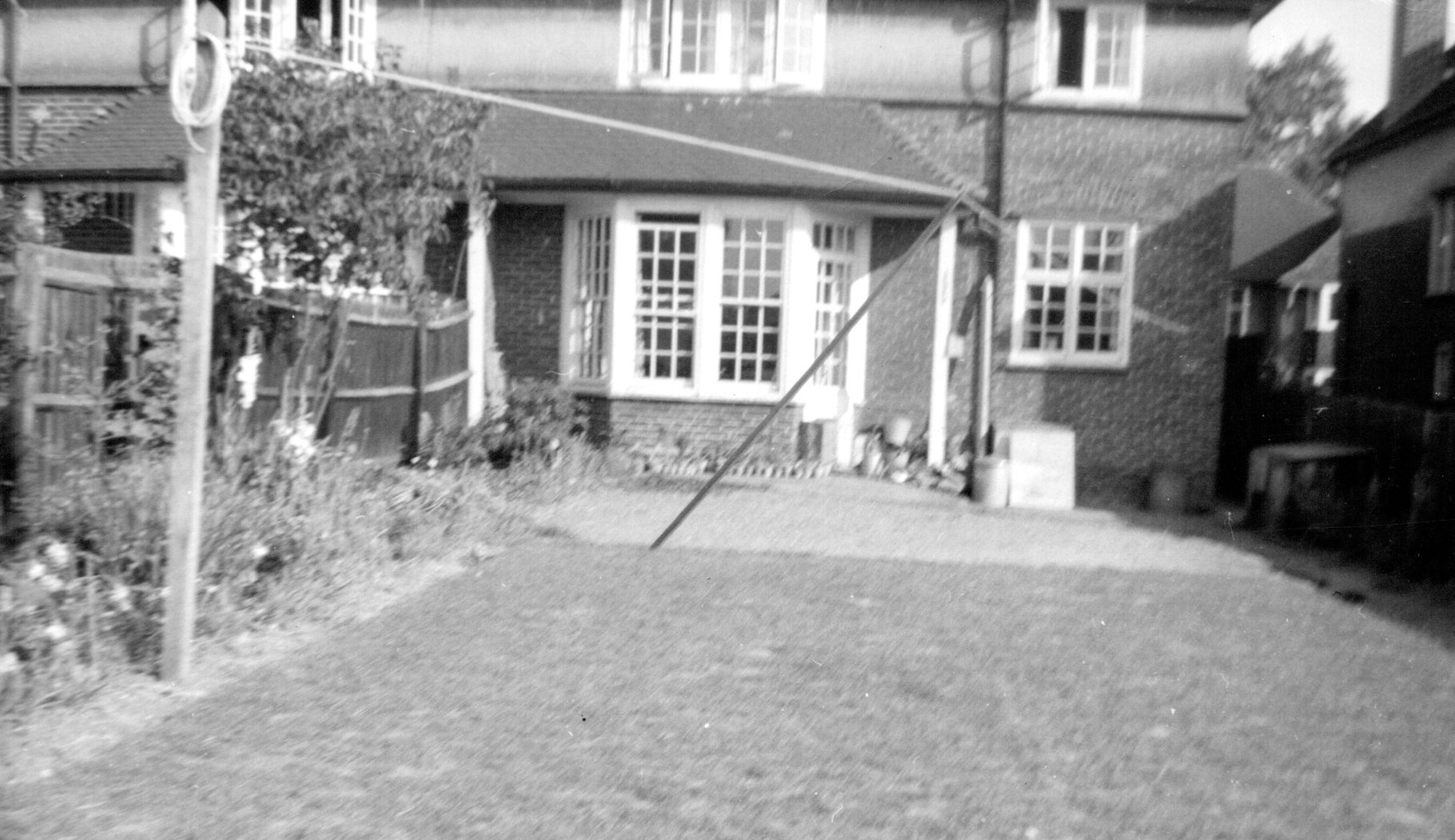
25 Park Road in summer 1961
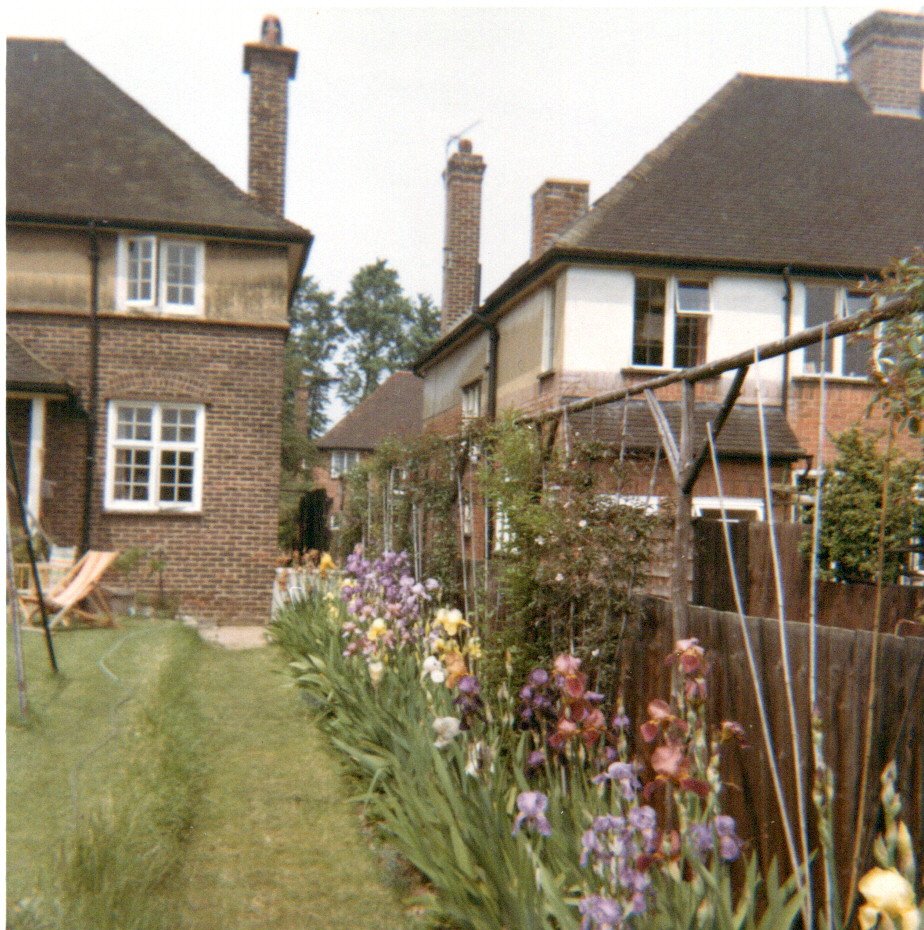 Dad's Iris border in June 1967
The Methodist Church was in Station Road, parallel to Park Road and we were soon involved in things there. At that time Radlett was extremely ecumenical and we often had contacts with the Parish Church and with the Congregational Church. As time went on I was Communion Steward and later Society Steward and also played the organ sometimes as a relief for Alan Llewellyn. Jane Llewellyn and Hilary became firm friends as they grew up together.
We joined the Radlett Players. This sounds a small thing but the Players became a great influence in our lives. Starting out helping with set construction and stage management I was concerned with many plays, later acting and producing. Marilyn also acted and took part in many other ways. Later I was elected Chairman of the Players in which position I stayed until 1975 when we moved to Berkhamsted.
In 1970 the Players put on their first Music-Hall and I was Music-Hall Chairman. It was a totally different experience. In a way it was a combination of acting and facing a class' because there could be no script - all my part was 'ad lib'. The first Music-Hall was put on for three nights, wondering if Radlett would support it. We need not have worried. The annual Music-Hall became so popular that eventually it was put on for a fortnight (but this was after we had left). It is still going strong, even though the venue and conditions have altered. {In a marginal note FWB writes 'amend'}
The hall was laid out with tables, not with rows of seats. and waiters and waitresses served drinks (and from time to time performed on the stage as well). Food (bread, cheese and pickles) were available and the audience was part of the show. We encouraged them to come in period dress and they responded. I liked to have something to say about members of the audience, and the waiters gave me bits of information they had picked up as they did their serving. Starting with the Loyal Toast (Victoria !) we tried to keep up the atmosphere of Old-Time.
With the Players doing two plays and a Music-Hall each year we had plenty to occupy ourselves but I had also got involved with drama at School. We ran a Staff Group for a time, putting on comedies, and we also did three pantomimes using as many of the school as we could. Then, putting two things together, I was asked to produce a Music- Hall for the Parents Association.
As time went on, Hilary went to Gill's Hill School and David moved from Radlett to the Watford Boys Grammar School. Later it was time for Hilary to move up and we opted for the Girls Grammar School. Unfortunately this was at the time when all schools were being made comprehensive (as I said earlier) and she was allocated a place at Queens School, a combination of Bushey Grammar and another school in Watford, the two schools coming together on an extended site. We were disappointed, but accepted the situation, but Hilary became progressively more unhappy.
At that time Bernard Alderson was still Headmaster and I happened to mention at lunch one day that Hilary was at Queens. The Headmaster said nothing but called me into his study later. He told me that Hilary had been allocated a place at the Girls Grammar School but evidently the decision had been over-ruled to provide an all-ability intake for Queens. He was very annoyed and said at once that she could leave Queens and come to us at Bushey Hall if I wished, Of course I agreed. Although in theory I still thought that it was not a good thing for father and daughter to be at the same school, the change could not be anything but good. I went to see the Deputy Head of Queens that afternoon, Bernard Alderson spoke to the Headmaster, and Hilary started at Bushey Hall the following week.
As I was Head of Chemistry I could arrange that Hilary would not be in the classes I was teaching. Being the 'top man' has some advantages.
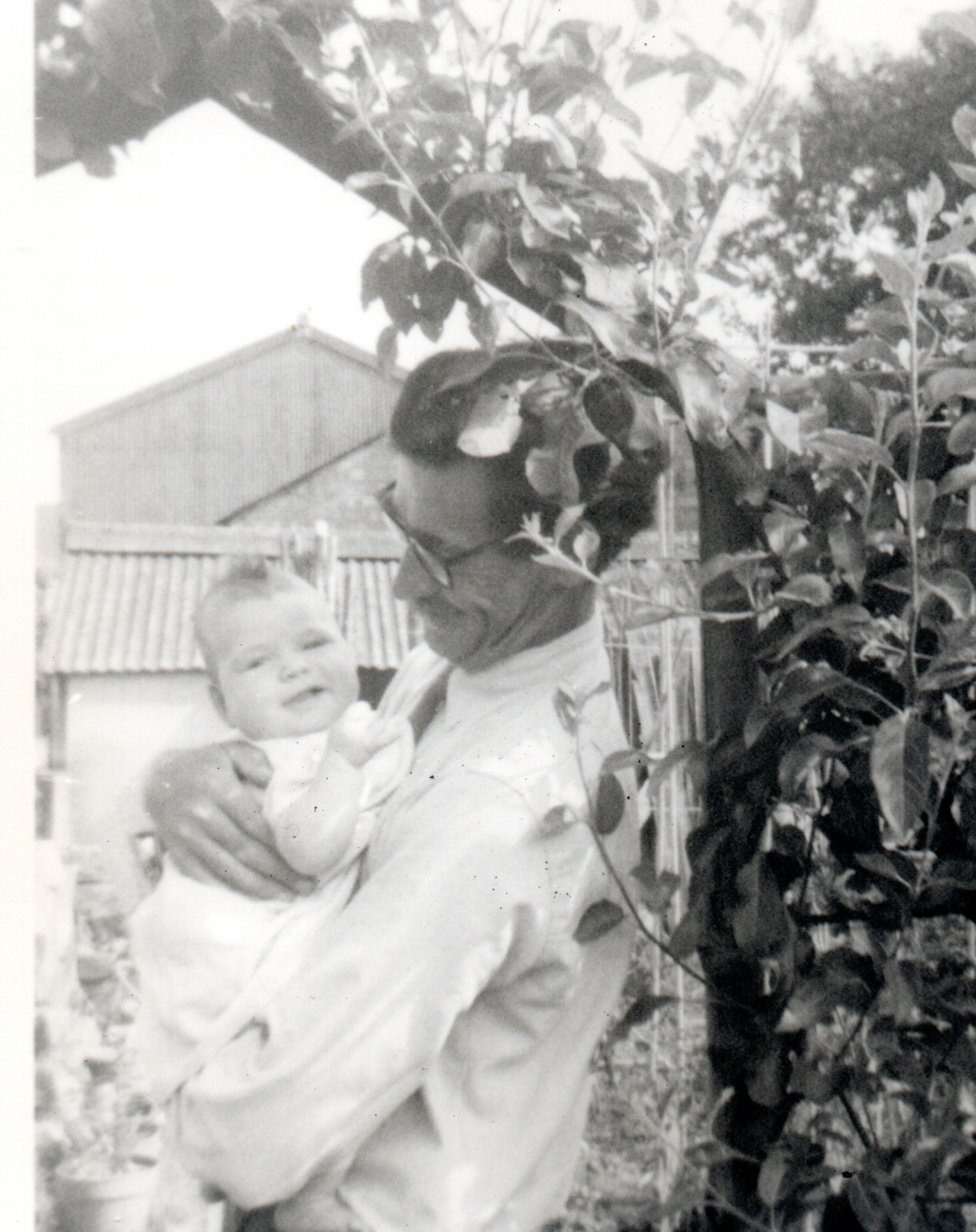
Dad & Pippa 1970 under the trellis arch at 25 Park Road with the garage in the background.
In 1970 Pippa was born. Sometime earlier we had decided that my mother would have to come and live with us and we had given her the front room downstairs as a 'bed-sitter'.
It must have been in the early 1960s that Dad's mother 'Granny Brush' came to live at Radlett - well before Pippa's arrival. With the front reception room (which had been the dining room?) turned into a bedsit for her, the dining table was moved into the bay window in the back room which was from then an all-purpose living room.
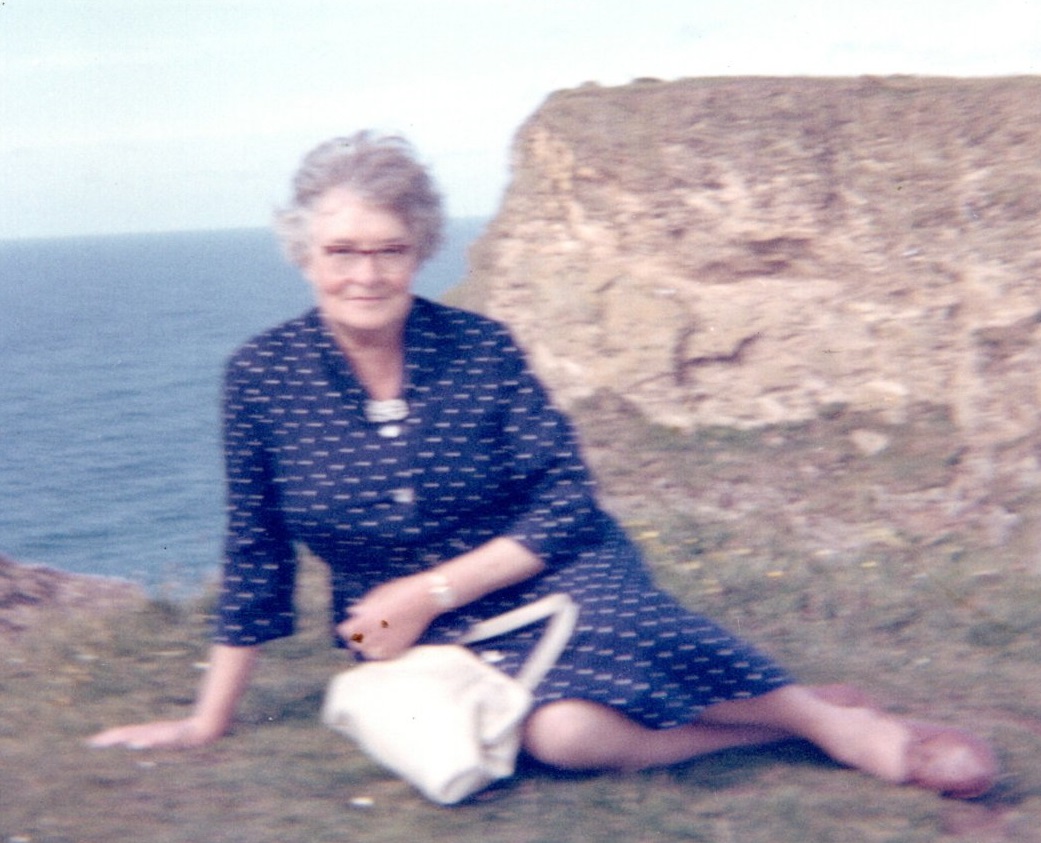
Granny Brush on holiday at Lands End in 1965. There are very few photos of her.
This meant that in 1970 there were six of us in the house and things were a little cramped. I put up a temporary partition in the back bedroom so that Hilary and Pippa could be in different rooms but it was not satisfactory. There was only one thing to do - move again. I was still teaching at Bushey so the new house would have to be within reasonable reach of the school. We needed five bedrooms to be enough for us all and this inevitably pointed us to the older houses. Large modern houses were beyond the reach of a schoolmaster's salary. We found one at Berkhamsted.
This move did not happen until the autumn of 1975, by which time Pippa was 5. The move was going to be to a house in Harpenden but this proposed purchase fell through.
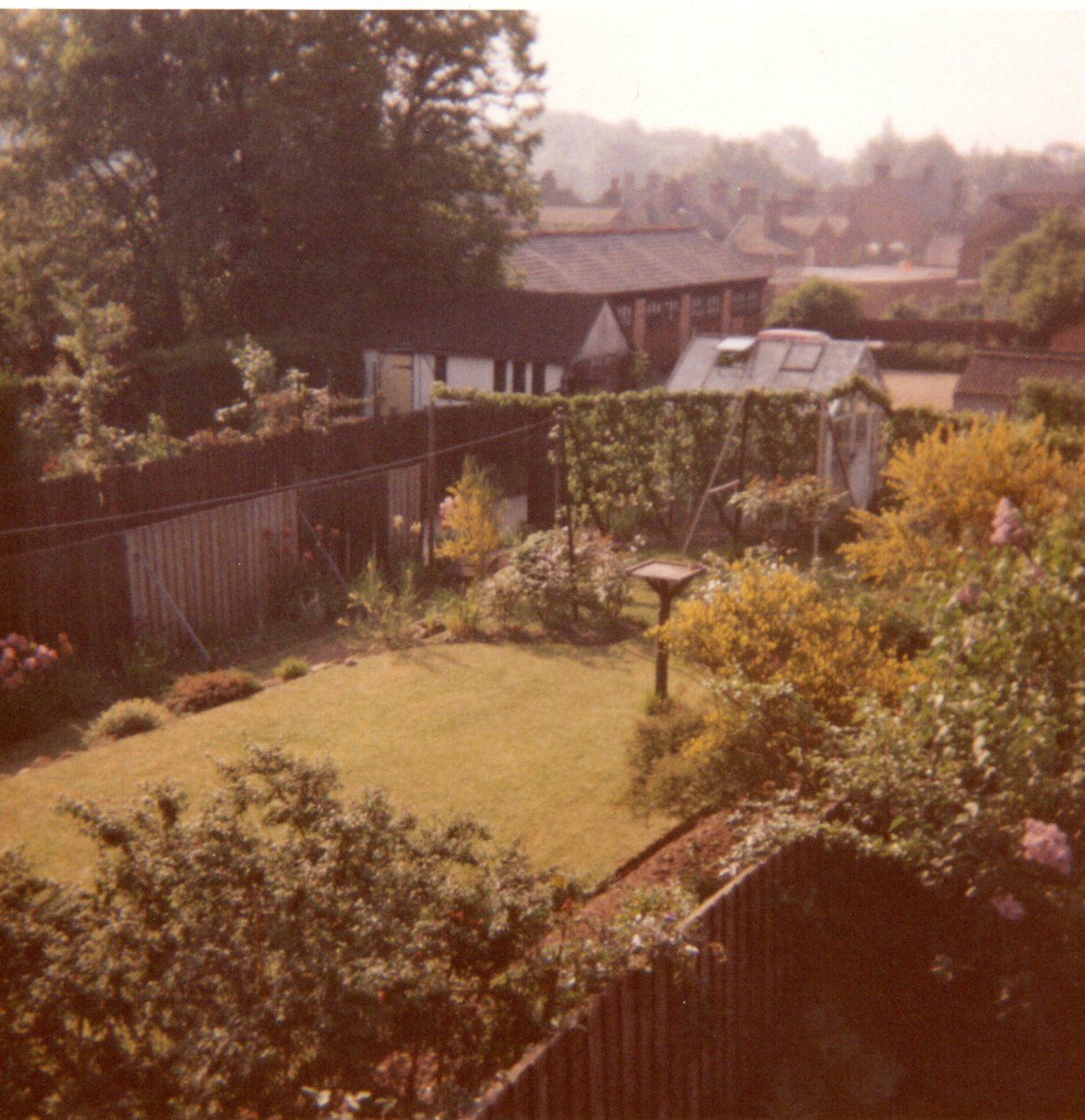
The garden of 25 Park Road taken, from no. 27, on 1 June 1974.
The garden of 25 Park Road taken, from no. 27, on 1 June 1974.
Continued in Part 6 - Berkhamsted
Part 1,
Part 2,
Part 3,
Part 4,
Part 5,
Part 6,
Part 7
Parents Childhood Army Pakenham Radlett Berkhamsted Bourton
Part 1,
Part 2,
Part 3,
Part 4
Parents Childhood Army Pakenham
Part 5,
Part 6,
Part 7
Radlett Berkhamsted Bourton